 Free delivery on all ordersNo minimum spendShop & Split Your Payment with Tamara.Same day delivery within 2 hours (place your order before 9 PM)Safe and secure shoppingWe are a MOHAP approved online pharmacyWe deliver to Emirates of Dubai and Abu Dhabi.


Back-to-School Itch: How to Spot Head Lice and Nits

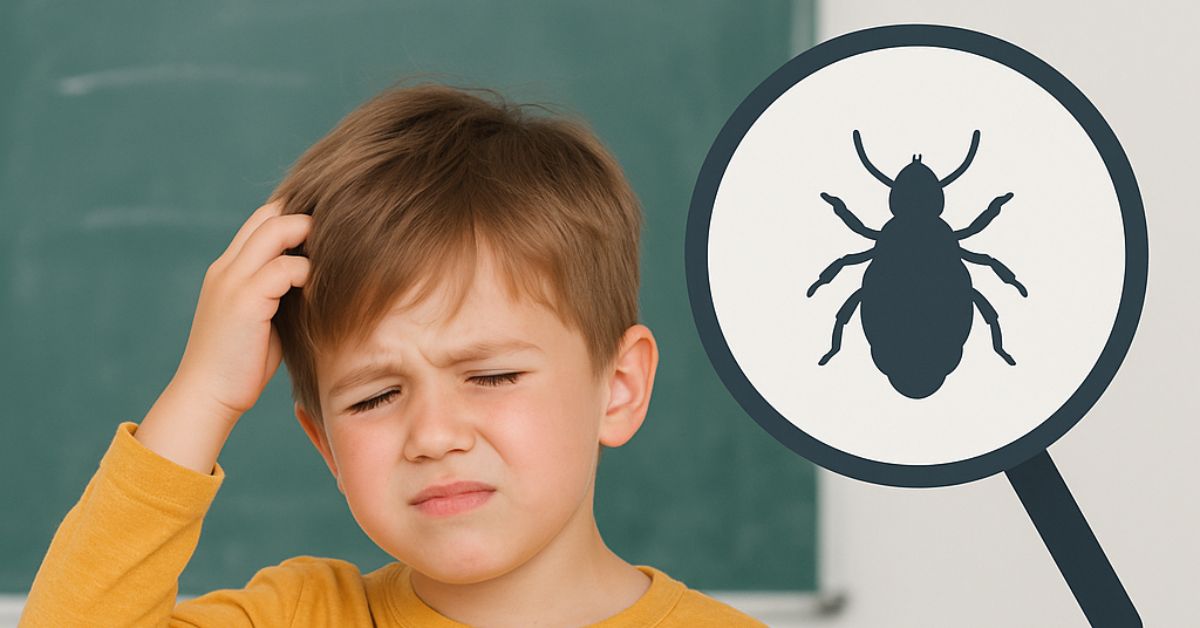
Back-to-School Itch: How to Spot Head Lice and Nits
Head lice infestation (known medically as pediculosis) is one of the most common conditions affecting school-age children, and cases climb once term begins and classrooms fill up again. These tiny insects live on the scalp and feed on blood, spreading through close head-to-head contact. They carry no disease, but they cause real discomfort, and for many families the stress of not knowing what to look for is worse than the lice themselves.
Most parents only discover an infestation weeks after it started. Knowing what to check for, and where, is what shortens that gap.
What do head lice and nits actually look like?
An adult head louse is about the size of a sesame seed, greyish-brown, and moves quickly away from light, which is why you rarely see one. Nits are the eggs: tiny, teardrop-shaped, yellowish-white, and firmly glued to individual hair strands close to the scalp. Nits are far easier to spot than live lice, and finding them is usually the first real evidence.
The life cycle explains why one treatment is never enough. A female louse lays eggs that hatch in seven to ten days. The newly hatched nymph takes roughly another week to mature and begin laying its own eggs. Anything that kills live lice but not eggs leaves a new generation ready to hatch, which is why checking and combing has to continue for a full two weeks.
Two details are worth correcting, because both come up constantly. Head lice cannot jump or fly, they crawl, and only between heads that are touching. And itching is not a reliable early sign: it can take four to six weeks to develop on a first infestation, because it's an allergic reaction to lice saliva rather than to the bites themselves. A child with no itch may still have lice.
Where on the head should you check first?
Start behind the ears and along the nape of the neck. These are the warmest parts of the scalp and where lice most often lay their eggs, so nits usually appear there first and in the greatest number. Check under bright natural light with the hair damp, working in small sections with a fine-toothed comb from the scalp outward.
Damp hair matters more than most parents realise. Wet lice move much more slowly, so anything present is easier to catch on the comb rather than escaping deeper into the hair. Wipe the comb on a white paper towel after each pass, against white, both nits and lice are far easier to see than against hair.
Give it ten to fifteen minutes. A quick look through dry hair in poor light will miss a light infestation entirely, which is how most cases go undetected long enough to spread.
How can you tell nits from dandruff?
The difference comes down to one thing: nits are glued in place, dandruff is not. A flake of dandruff slides freely along the hair strand and falls away when you shake the hair or blow on it. A nit is cemented to the hair shaft and needs to be pulled along the strand with your fingernails or lifted with a comb. If it moves easily, it isn't a nit.
Two other signals help. Nits sit close to the scalp, usually within a centimetre of the skin, because lice lay their eggs where it's warmest. Dandruff appears scattered along the whole length of the hair. And nits are consistently teardrop-shaped and uniform in size, whereas dandruff flakes are irregular.
You may also see white shells further down the hair shaft. These are empty casings from eggs that have already hatched, and hair growth has carried them away from the scalp. They aren't a sign of active infestation on their own, but they do confirm lice were there, so a careful check closer to the scalp is worth doing.
Can head lice live on pillows and bedding?
Only briefly. A head louse separated from the scalp usually survives no more than a day or two, because it can't feed and dries out quickly away from body heat. Nits removed from hair are even less viable and rarely hatch. This is why household transmission is far less common than direct head-to-head contact, and why deep-cleaning your entire home isn't necessary.
That said, a sensible level of laundering helps. Wash bedding, pillowcases, towels and any recently worn hats in water at 54°C or above, and dry on high heat. Items that can't be washed, soft toys, a favourite cushion, can simply be sealed in a plastic bag for two weeks, by which point anything on them will no longer be alive.
Skip the household insecticide sprays. They add no benefit over ordinary laundering and introduce a chemical exposure in your home that isn't warranted.
Do head lice prefer clean or dirty hair?
No, hair hygiene has nothing to do with it. Head lice grip smooth hair shafts and feed on the scalp regardless of how recently the hair was washed. Some evidence suggests they attach slightly more easily to clean hair. An infestation says nothing about a family's cleanliness, and it is one of the most common childhood conditions worldwide.
This matters beyond reassurance. The stigma around lice is the main reason parents delay telling the school or other families and that silence is exactly what lets an outbreak spread through a class. Treating it as ordinary, the way you'd treat a cold going round, gets it resolved faster.
Hair length and type make little difference either. Long hair isn't more susceptible; it simply takes longer to check and comb through.
How do you stop head lice spreading at school?
Prevention rests almost entirely on limiting head-to-head contact, since that's how lice actually move between children. Teach your child not to share hats, hair ties, combs, brushes, headphones or scarves, and to avoid pressing heads together during play, group photos and phone-sharing, the moments when transmission most often happens.
Tying long hair back into a plait or bun genuinely reduces the opportunity for contact, and takes a few seconds each morning. During term, a weekly check of a few minutes is the single most effective thing you can do, not because it prevents lice, but because it catches them early, when a small number are far easier to clear and less likely to reach the rest of the class.
You'll see repellent sprays and scented products marketed on the basis that lice dislike tea tree, rosemary or peppermint. The evidence for these is limited and inconsistent, and none should be treated as a substitute for checking. If you choose to use one, use it alongside regular combing rather than instead of it.
What should you do if you find lice?
Wet combing is where to start. Apply a generous amount of ordinary conditioner to wet hair, then comb the entire head systematically with a fine-toothed nit comb, wiping it on white paper after each pass. Repeat every three to four days for two weeks, so that anything hatching in between is caught before it can mature and lay eggs.
Most parents pair combing with a medicated treatment. Combination packs make this simpler, since the comb is included and matched to the product, the Puressentiel 2-in-1 treatment shampoo with comb works as a single step in the shower, while the Puressentiel anti-lice lotion with comb is applied to dry hair and left on before combing through.
If your child resists a full shampoo treatment, a spray is quicker to apply and easier on a reluctant head. Nyda Express anti-lice spray is applied directly and left in place before combing.
Once the infestation is clear, a repellent spray used before school can reduce the chance of picking lice up again during an outbreak in your child's class. Treat it as a supplement to weekly checking, not a replacement for it.
Whichever you use, the timing principle is the same: no single application clears an infestation permanently, because none reliably kill every egg. Follow the repeat schedule on the pack, and keep combing throughout. If you're unsure which option suits your child's age or hair type, speak to any of our pharmacists in store or by phone on 800979.
Tell the school and any families your child has been in close contact with. It feels awkward, and it is the single most effective step in stopping an outbreak spreading through a class and coming straight back a fortnight later.
Disclaimer:
This content is for informational purposes only and is not a substitute for medical advice. Please consult your healthcare provider before using any treatment, especially for children.
September 11, 2025
|
View: 408
|
Categories: Children & Baby Health
| Tags: lice prevention, head lice, lice, pediculosis, school hygiene
Related Posts

Child Cough: Home Care Tips & Warning Signs for Parents
December 18, 2025| Posted in Children & Baby Health| 416