 Free delivery on all ordersNo minimum spendShop & Split Your Payment with Tamara.Same day delivery within 2 hours (place your order before 9 PM)Safe and secure shoppingWe are a MOHAP approved online pharmacyWe deliver to Emirates of Dubai and Abu Dhabi.


Cicalfate, Cicaplast or Cicapost? A Pharmacist's Guide to the Three "Cica" Creams

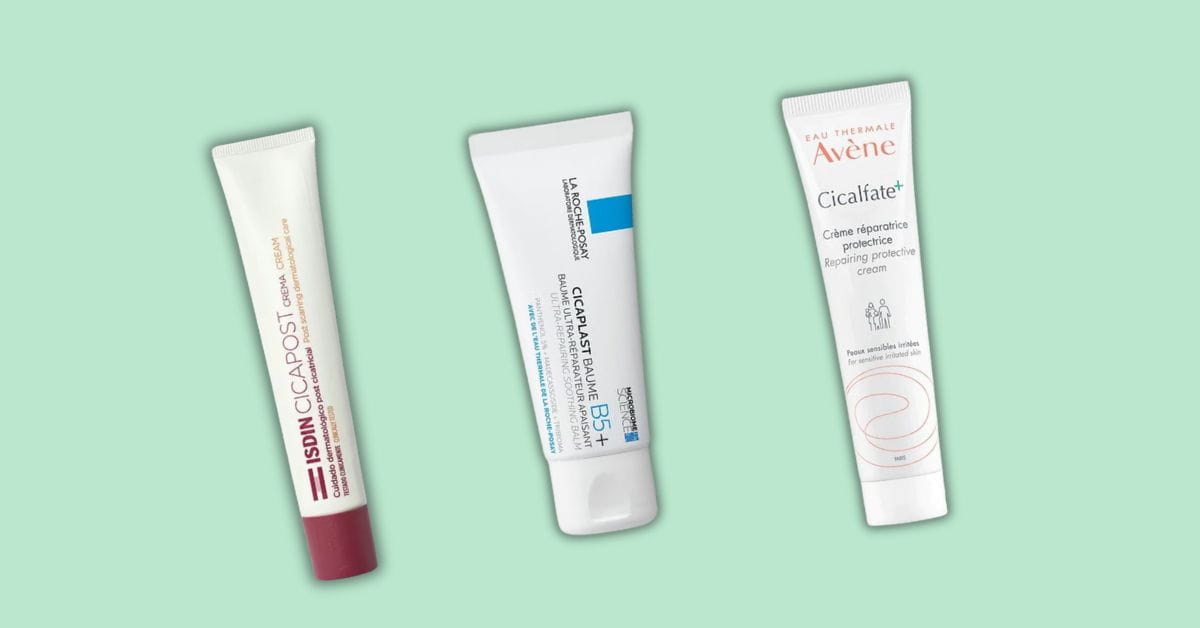
Cicalfate, Cicaplast or Cicapost? A Pharmacist's Guide to the Three "Cica" Creams
If you've stood in front of the pharmacy shelf holding three near-identical white tubes: Cicalfate, Cicaplast and Cicapost and wondered whether they're the same product with different labels, you're in good company. It's one of the questions we field most often at the counter. The honest, short answer: they all belong to the "cica" family, they all help skin recover, but each one is built for a different moment in that recovery. Choose the wrong one and you won't do any harm; you just won't get the result you were hoping for.
Here's how to tell them apart, and how to know which one you actually need.
What does "cica" even mean?
"Cica" is short for cicatrisation, the medical term for wound healing. Most of these creams take their name from Centella asiatica, a plant also known as gotu kola or tiger grass that has a long history of calming and supporting skin as it repairs. That shared heritage is precisely why the names blur together on the shelf. The real differences lie in what each formula adds on top of that base, and the stage of healing it's designed for.
Think of skin recovery as three stages: the moment the skin is freshly broken and raw, the days and weeks of soothing while it settles, and the mark or scar that's sometimes left behind once everything has closed. Each cream has a stage where it shines.
Avène Cicalfate+ - for skin that's just been broken
Cicalfate+ is the one to reach for when skin is freshly compromised: a graze, a superficial burn, raw or weeping areas, or skin straight after a dermatological procedure. Its job is to protect and purify while the barrier knits back together. The formula leans on a copper-zinc complex, valued for helping keep the area clean and calming irritation, alongside Avène's thermal-water postbiotic complex to support recovery. The texture is on the richer, more occlusive side, which is the point, it sits over distressed skin like a protective layer. This is an early-stage product, used before you're anywhere near thinking about a scar.
La Roche-Posay Cicaplast Baume B5 — the everyday soother
Cicaplast is the most versatile of the three, and the one people end up using daily. It's a comfort-and-barrier balm rather than a targeted treatment: dry, chapped, tight or irritated skin, rough hands, cracked lips, the flaky patch after a strong active. The hero ingredients are 5% panthenol (vitamin B5) and madecassoside, with shea butter and glycerin for cushioning. Because it's gentle, plenty of families keep a tube around for general use. What it isn't is a dedicated scar product, its strength is soothing and supporting the barrier day to day, not working on an established scar's appearance.
ISDIN Cicapost - for the scar that's left behind
Cicapost is the specialist of the three, and it picks up where the others leave off: once the wound has fully closed and you're left with an actual scar. Rather than simply soothing, it works on how the scar looks and feels over time — its texture, its suppleness, and crucially its colour. Rosehip oil and vitamin E help repair scar tissue, centella triterpenes and glycerin support elasticity, and dexpanthenol with niacinamide and sodium dextran sulphate help calm redness and even out the pigmentation that scars so often leave. That focus on tone and dark marks is what sets it apart from the general soothing balms, and it's why it's indicated for scars after surgery, stitches, burns, laser treatments or peels. If a fading mark is your concern, this is the ISDIN Cicapost post-scar cream to look at.
So which cica cream should I use, and when?
Reach for Cicalfate+ while the skin is still raw and recovering, keep Cicaplast B5 on hand for everyday soothing and dryness, and move to Cicapost once the wound has closed and you want to work on the scar itself. People dealing with a single event, say, recovering from minor surgery, sometimes use them in sequence: the protective cream early on, then the scar cream once everything has healed.
Can I use a cica cream on an open wound?
Cicapost should only go on once the wound is fully closed, never on an open or weeping area, and never over stitches that haven't been removed. A soothing balm or scar cream is not a substitute for proper first aid. If a wound is deep, won't stop bleeding, or shows signs of infection, that's one for a clinician, not a cream.
Do cica creams help with scar pigmentation?
A scar cream like Cicapost can help fade the dark marks a scar leaves and even out skin tone with consistent use, but only if you protect the area from the sun. Healing scars are unusually prone to darkening with UV exposure, which is the single most common reason a scar that was fading suddenly looks worse. So a daily sunscreen over the scar isn't optional; it's half the job. A lightweight daily sunscreen that absorbs without a heavy feel makes this far easier to keep up, and you'll find more options across our sun care range.
Disclaimer
This article is general information, not medical advice. For a wound that's deep, infected or not healing, please see a healthcare professional.
June 23, 2026
|
View: 3223
|
Categories: Skin Health
| Tags: cica cream, scar care, post-surgery skincare, sensitive skin, centella asiatica
Related Posts

From Itching to Rashes: Everything About Skin Allergies
September 23, 2025| Posted in Skin Health, Allergies and Immunity| 381

Hives (Urticaria): Symptoms, Causes, and Treatment (Plus When to Worry)
December 18, 2025| Posted in Skin Health, Allergies and Immunity| 379